Most people know that the Practice of Yoga makes the body strong and flexible. It is also well known that Yoga improves the functioning of the respiratory, circulatory, digestive and hormonal systems. Yoga also brings emotional stability and clarity of mind, but that is only the beginning of the journey to Samadhi, or self-realization, which is the ultimate Aim of Yoga.
The ancient sages, who meditated on the human condition 2,000 years ago, outlined four ways to self-realization:
Jnana Marg, or the path to knowledge, when the seeker learns to discriminate between the real and the unreal;
Karma Marg, the path of selfless service without thought of reward;
Bhakti Marg, the path of love and devotion;
Yoga Marg, the path by which the mind and its actions are brought under control.
All these paths lead to the same goal: Samadhi.
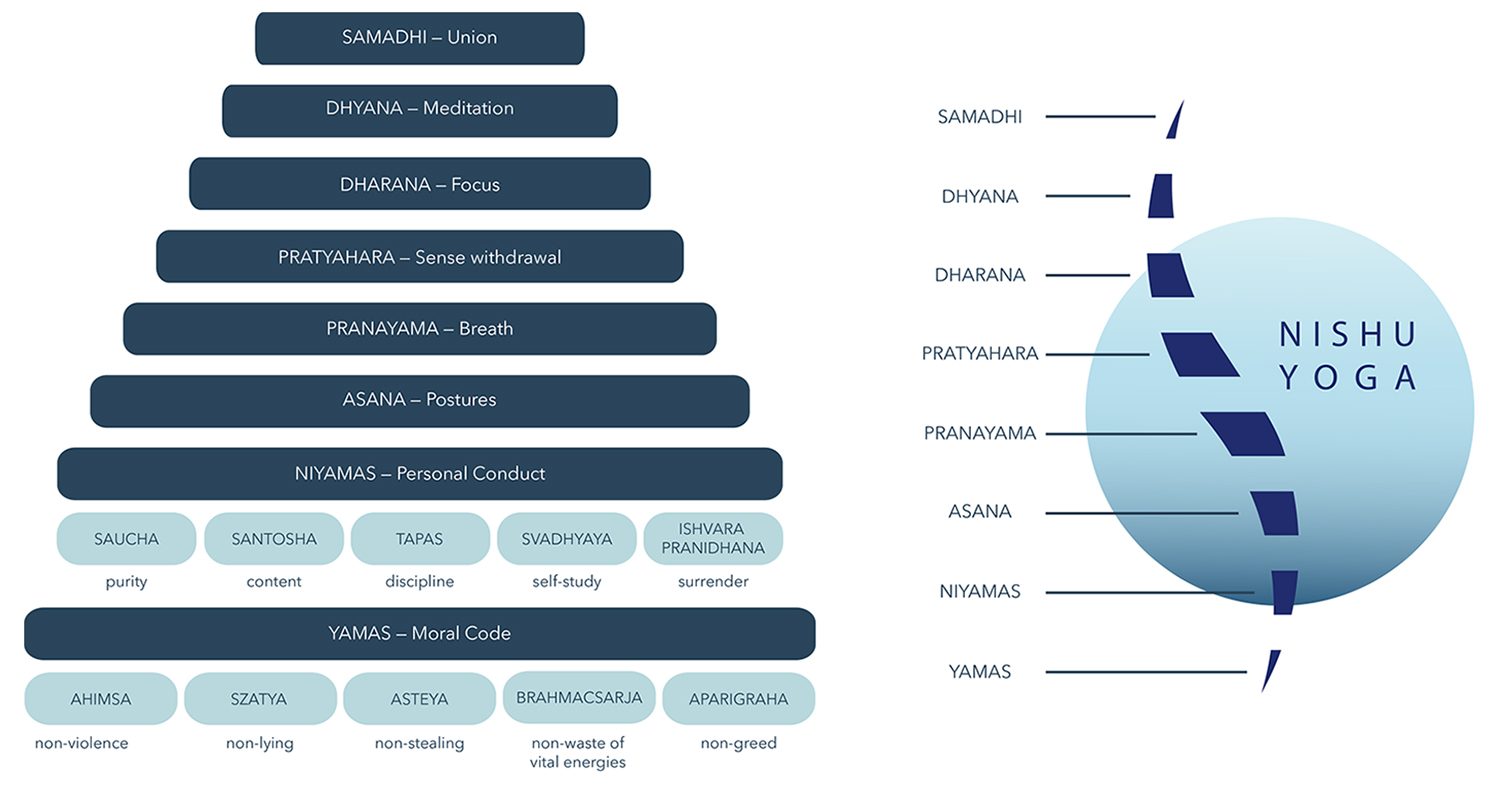
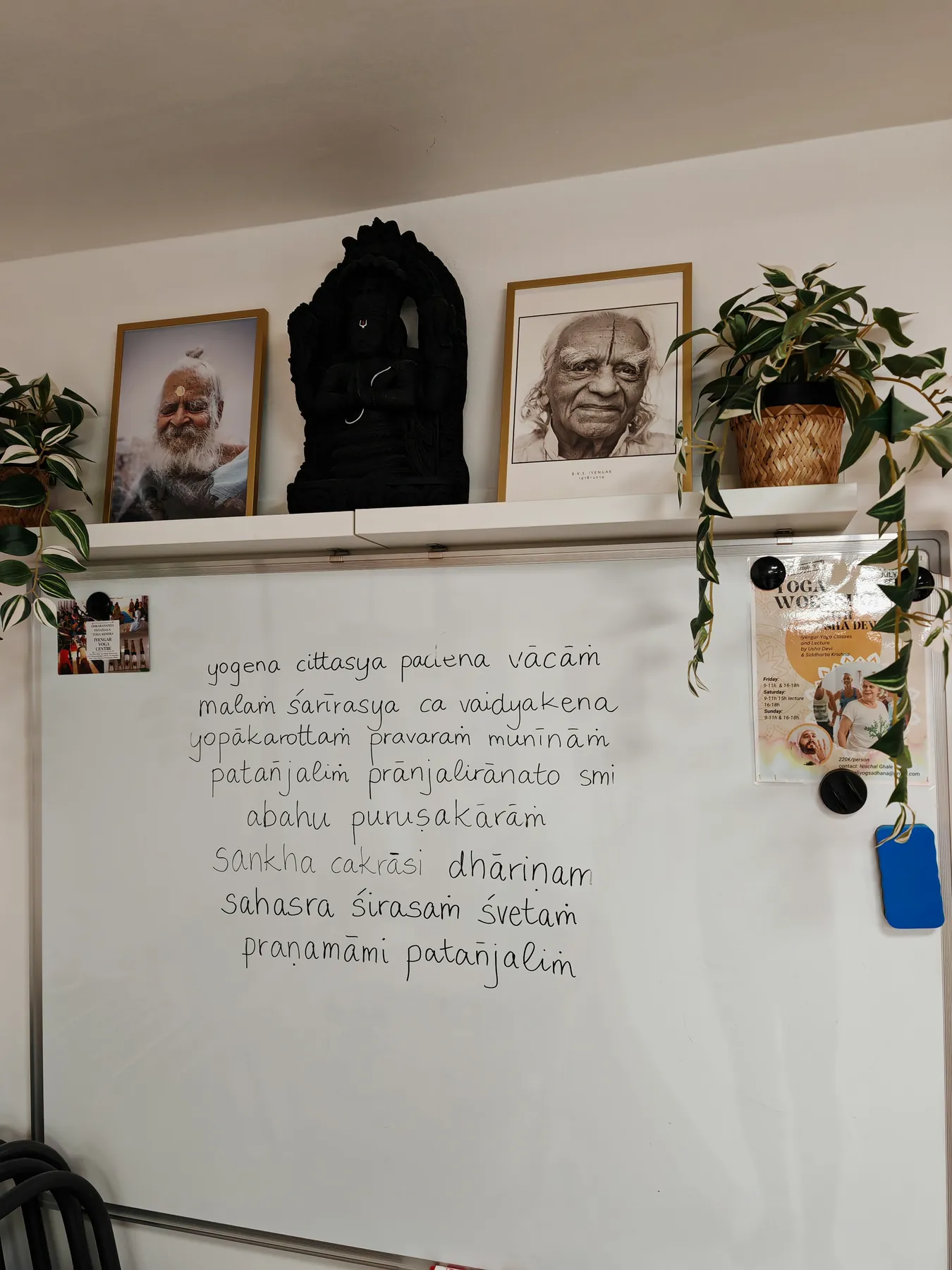
The word “Yoga” is derived from the Sanskrit root “Yuj” which means “to join” or “to yoke”; the related meaning is “to focus attention on” or “to use.” In philosophical terms, the union of the individual self, Jivatma, with the universal self, Paramatma, is Yoga. The union results in a pure and perfect state of consciousness in which the feeling of “I” simply does not exist. Prior to this union is the union of the body with the mind, and the mind with the self. Yoga is thus a dynamic, internal experience which integrates the body, the senses, the mind, and the intelligence, with the self. The sage Patanjali was a Master of Yoga and a fully evolved soul. But this great thinker had the ability to empathize with the joys and sorrows of ordinary people. His reflections and those of other ancient sages on the ways through which every person could realize his full potential were outlined in the 196 Yoga Sutras.