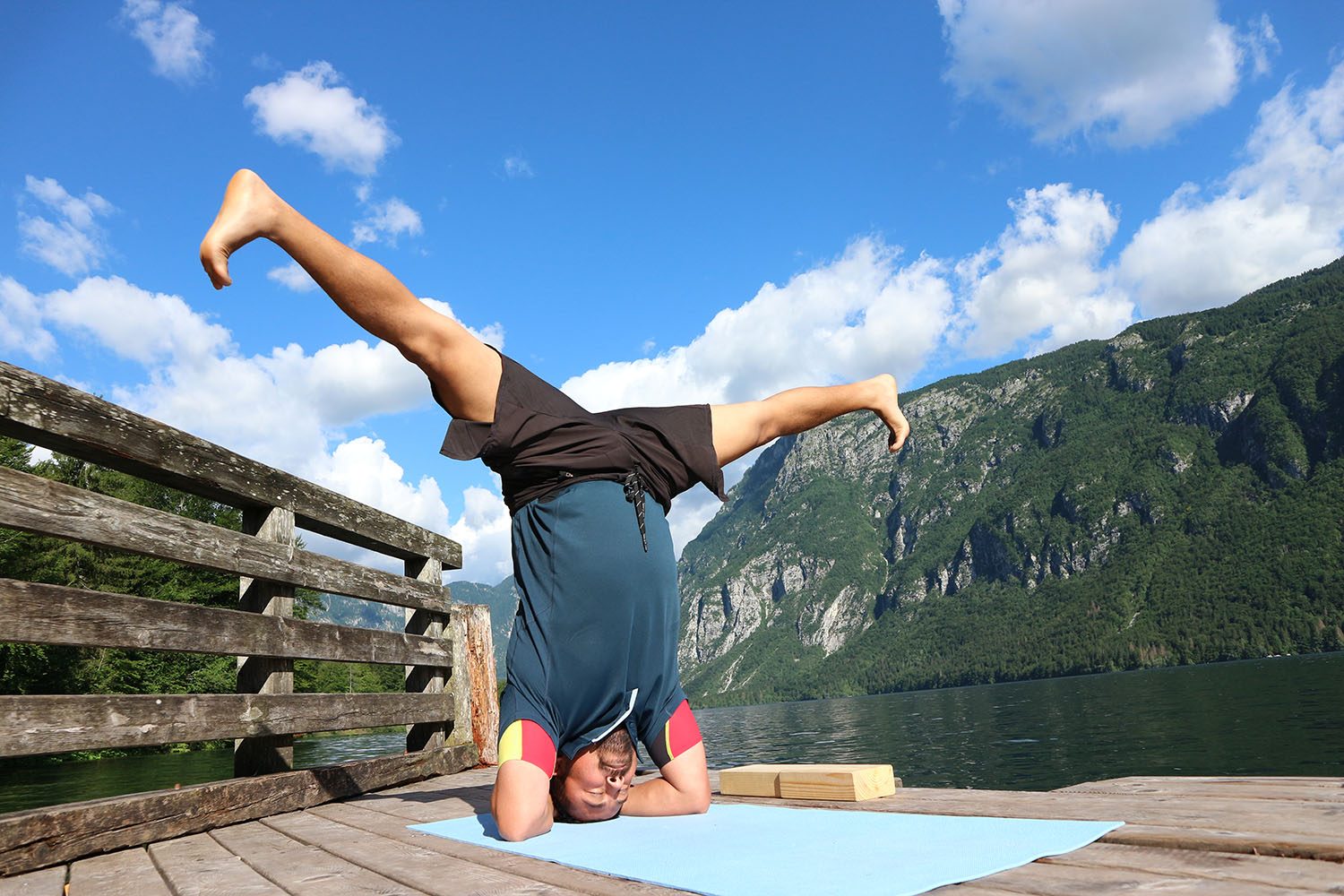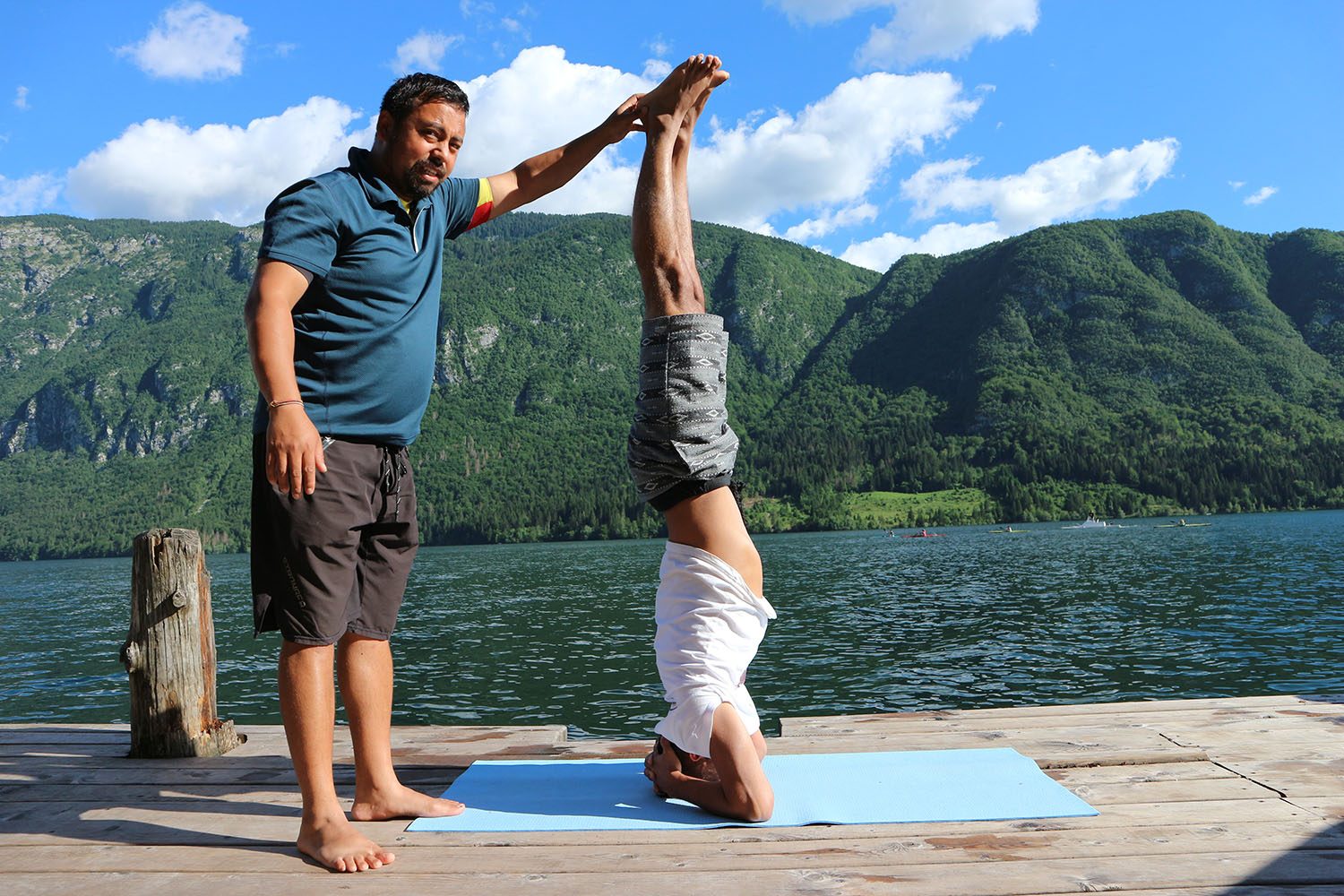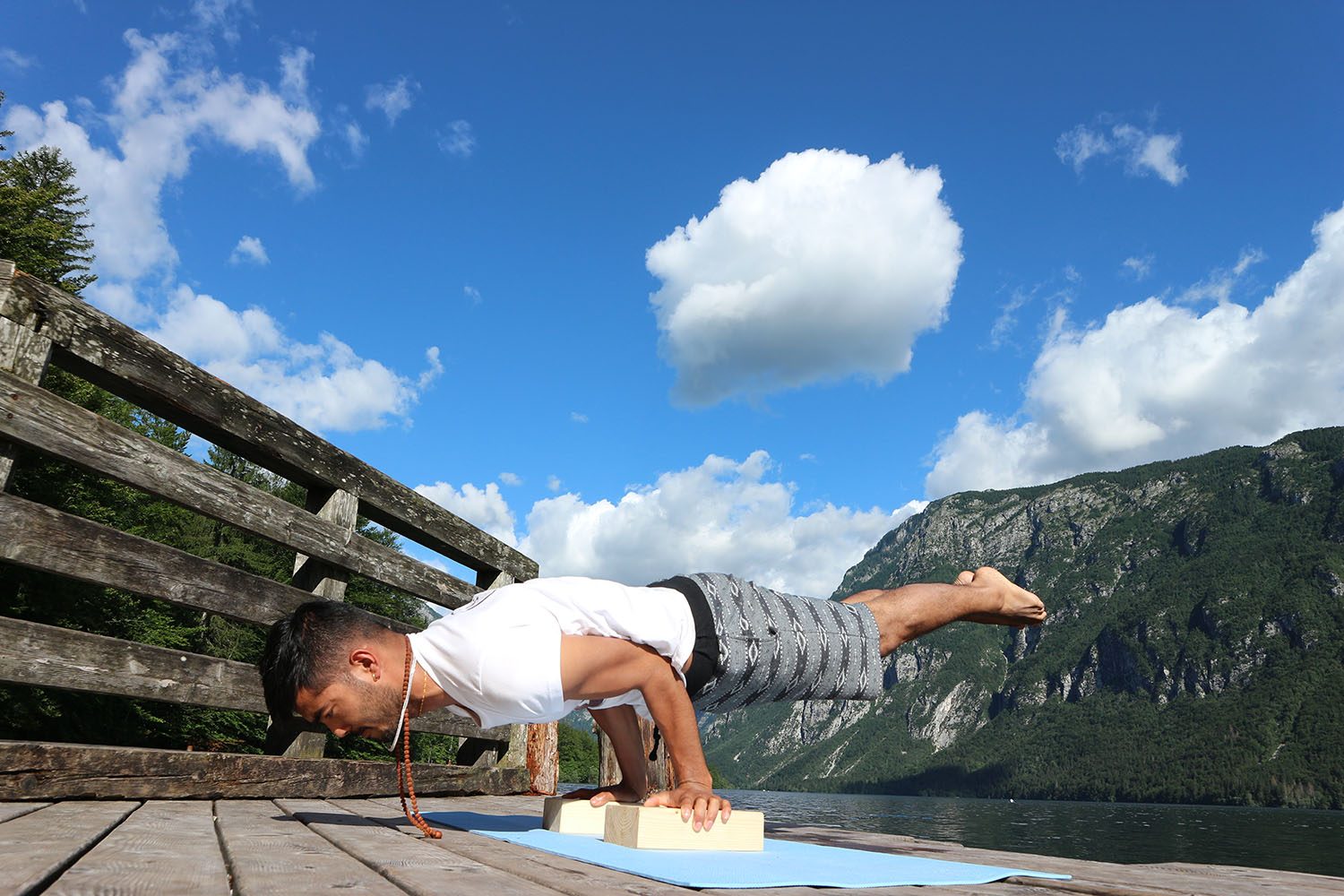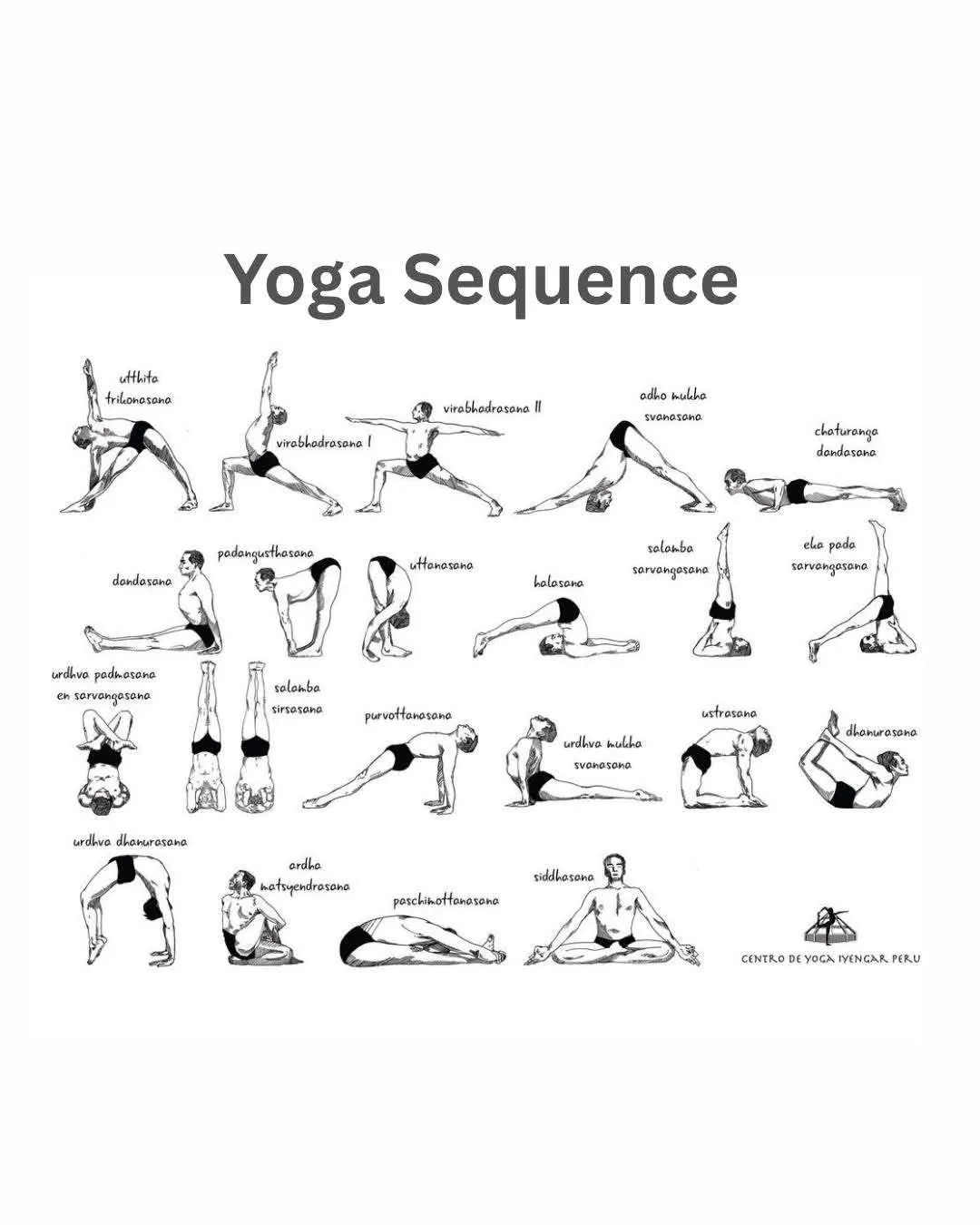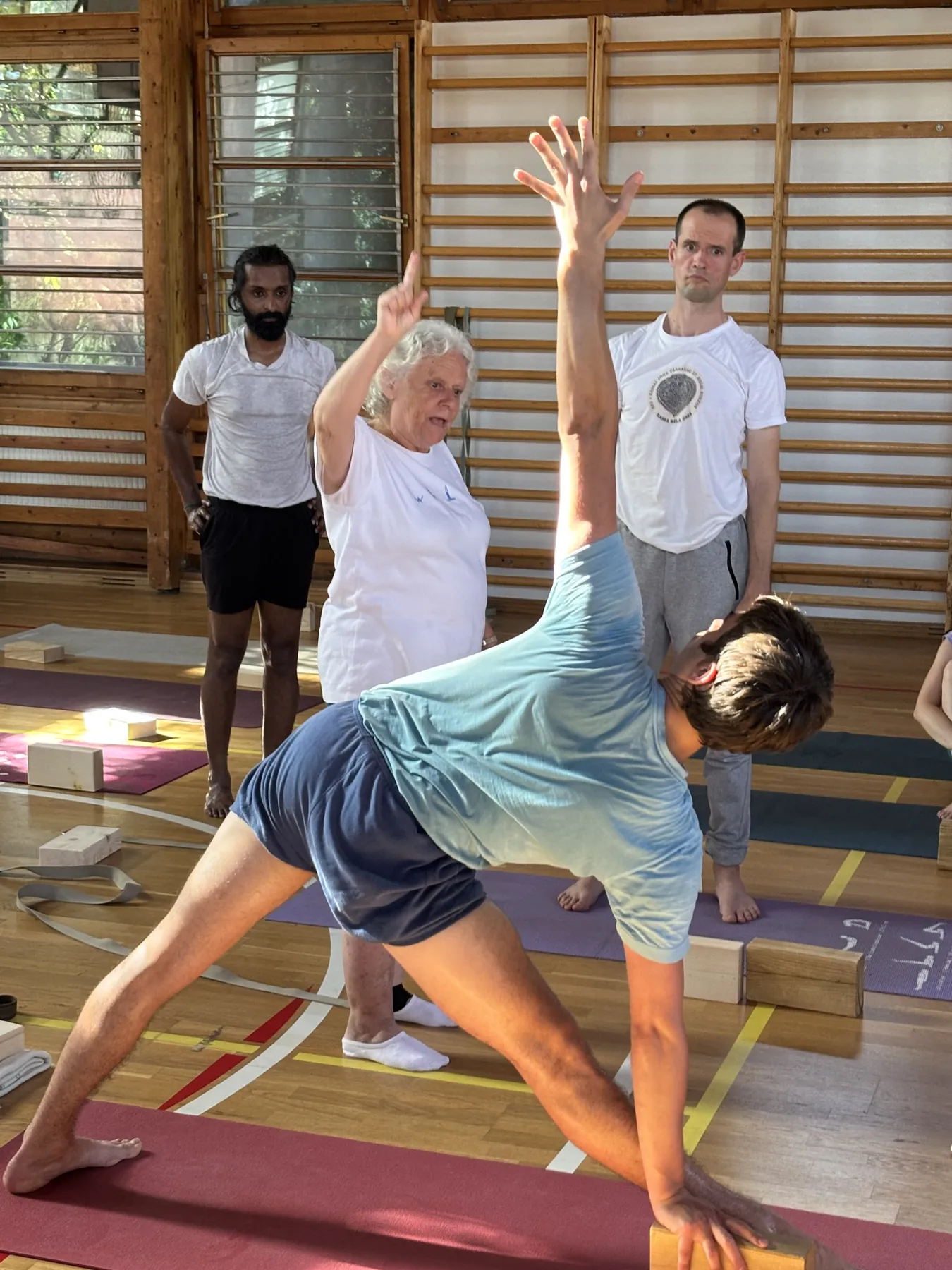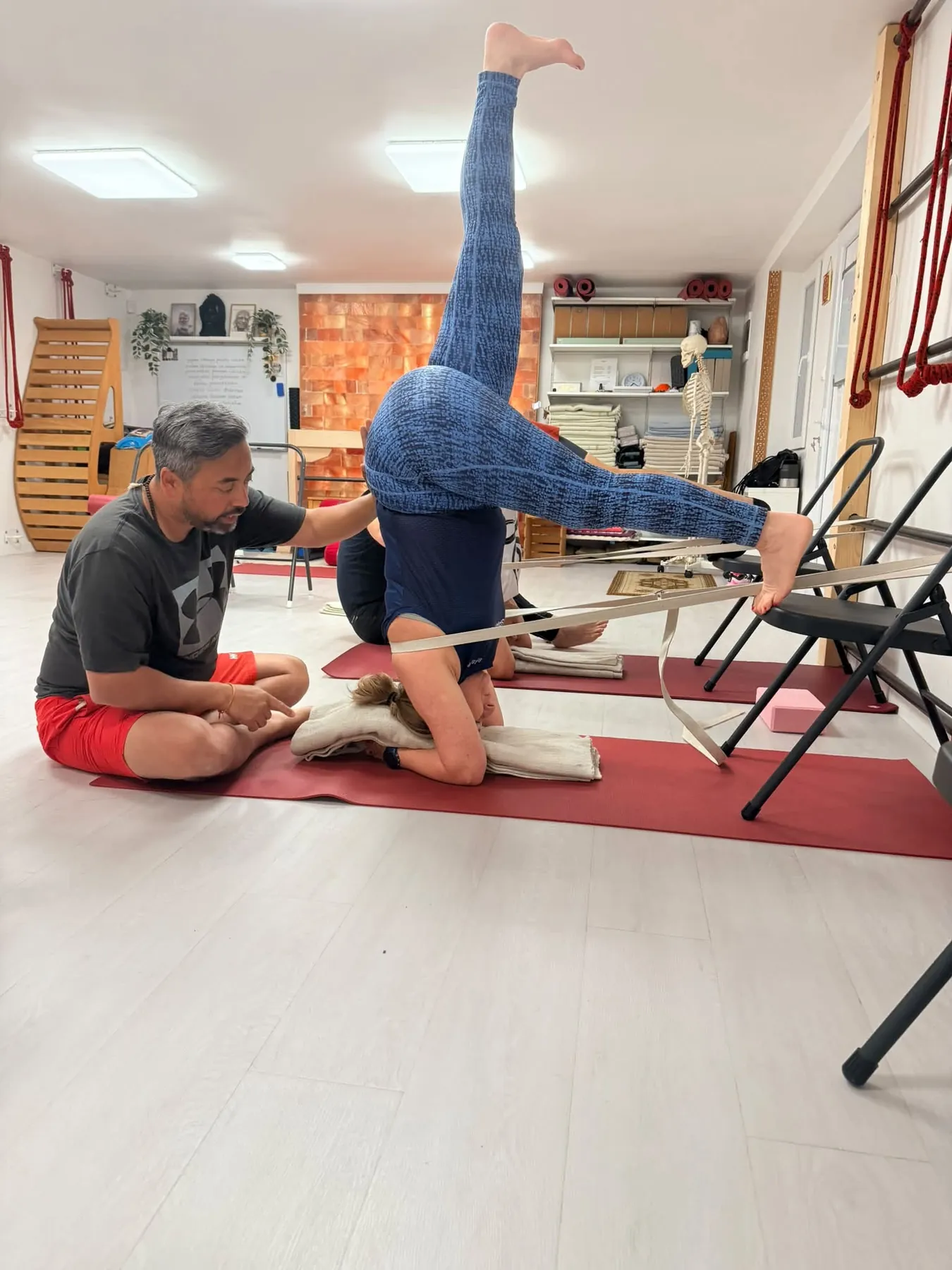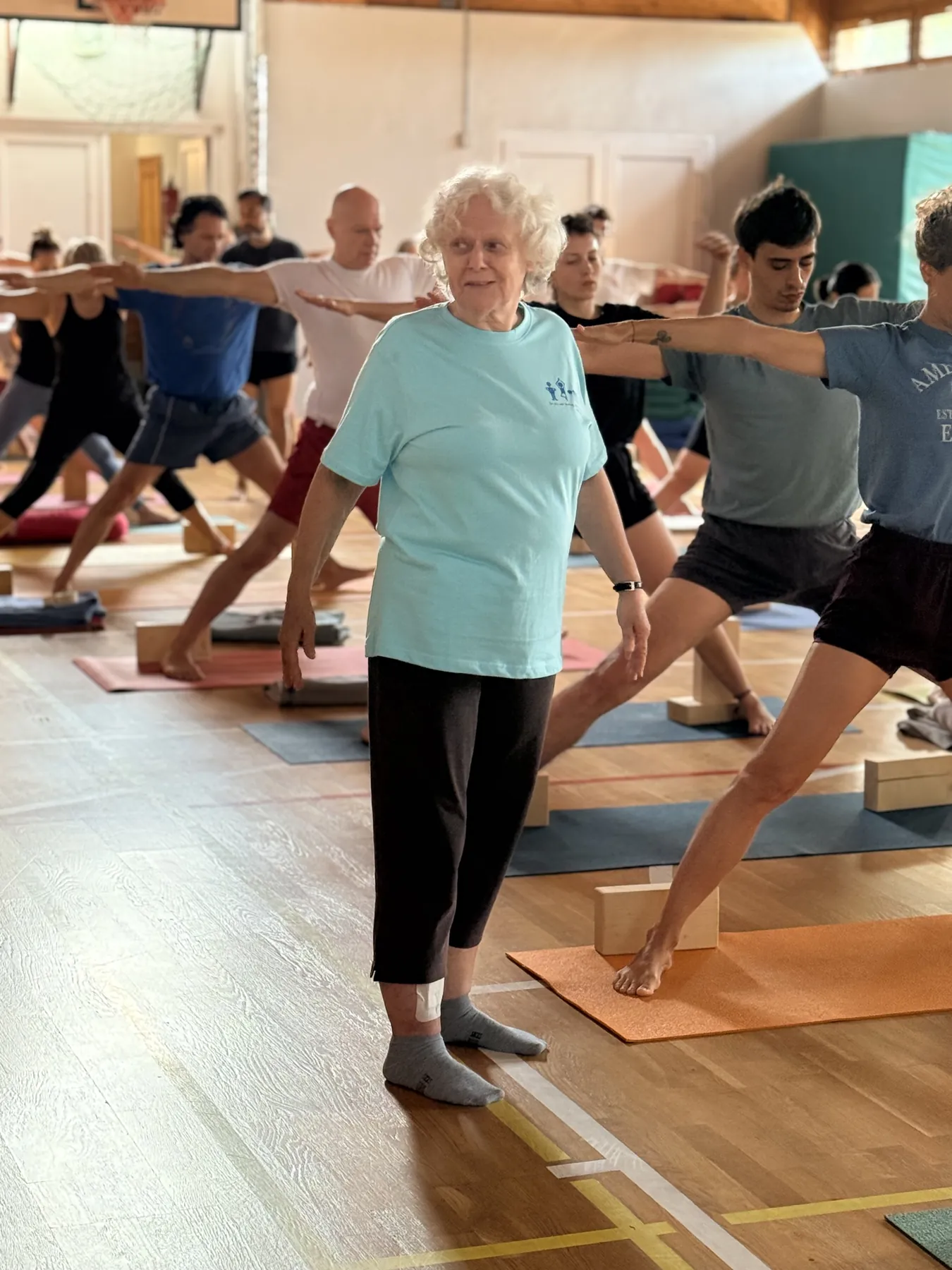
An Asana is not a posture that you assume mechanically. It involves a thoughtful process at the end of which a balance is achieved between movement and resistance. Your weight has to be evenly distributed over muscles, bones, and joints, just as your intelligence must be engaged.
Sitting Asanas
All sitting Asanas bring elasticity to the hips, knees, ankles, and muscles of the groin. These poses remove tension and hardness in the diaphragm and throat, making breathing smoother and easier. They keep the spine steady, pacifying the mind and stretching the muscles of the heart. Blood circulation increases to all parts of the body.
Standing Asanas
Standing Asanas strengthen the leg muscles and joints, and increase the suppleness and strength of the spine. Because of their rotational and flexing movements, the spinal muscles and intervertebral joints are kept mobile and well-aligned. The arteries of the legs are stretched, increasing the blood supply to the lower limbs, and preventing thrombosis in the calf muscles. These Asanas also tone the cardiovascular system. The lateral wall of the heart is fully stretched, increasing the supply of fresh blood to the heart.
Forward bends
In forward bends, the abdominal organs are compressed. This has a unique effect on the nervous system: as these organs relax, the frontal brain is cooled, and the flow of blood to the entire brain is regulated. The sympathetic nervous system Relieving tension and stress.
The torso is stretched in Bharadvajasana is rested, bringing down the pulse rate and blood pressure. Stress is removed from the organs of perception and the senses relax. The adrenal glands are also soothed and function more efficiently. Since the body is in a horizontal position in forward bends, the heart is relieved of the strain of pumping blood against gravity, and blood circulates through all parts of the body easily.
Forward bends also strengthen the paraspinal muscles, intervertebral joints, and ligaments.
Twists
These Asanas teach us the importance of a healthy spine and inner body. In twists, the pelvic and abdominal organs are squeezed and flushed with blood. They improve the suppleness of the diaphragm and relieve spinal, hip and groin disorders. The spine also becomes more supple, and this improves the flow of blood to the spinal nerves and increases energy levels.
Inversions
Some people fear that if they practice inverted poses, their blood pressure will rise, or their blood vessels will burst. These are complete misconceptions. After all, standing for long periods can lead to thrombosis and varicose veins, but no one is going to stop standing up! Standing upright is a result of evolution. Just as the human body has adjusted to an upright position, it can also learn to perform inversions without any risk or harm. In contrast to the twisting Asanas, inverted Asanas have a drying effect on the pelvic and abdominal organs, while vital organs like the brain, heart, and lungs are flushed with blood. According to the third chapter of the sage Svatmarama’s.